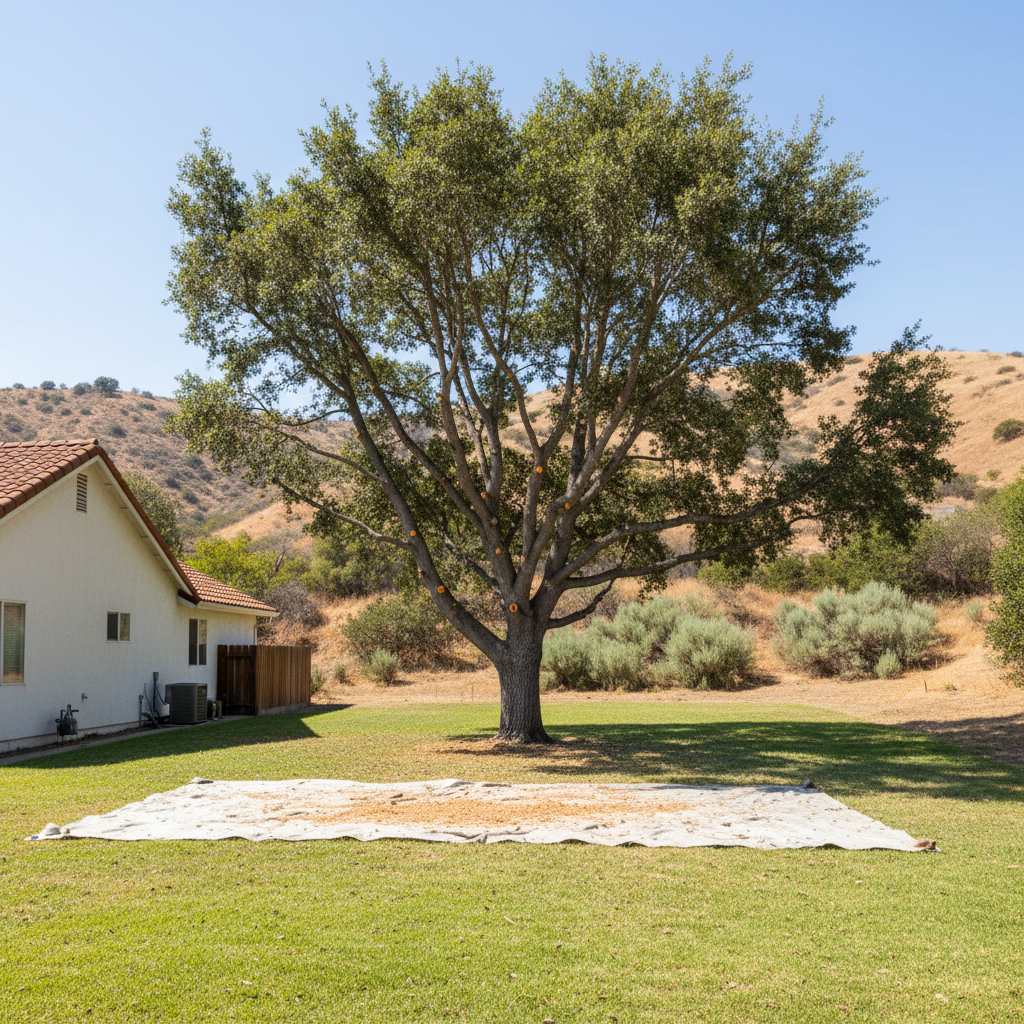
Keeping Your Pruning Work Looking Good Longer
You shelled out good money to have your trees pruned right, whether it was for clearance, health, or just curb appeal. So, how do you make that investment last? It's not rocket science, but it does take a little understanding of how trees grow, especially here in Camarillo where our climate can be a bit… enthusiastic.
First off, don't go hacking at new growth a few weeks after a professional job. Good pruning sets a tree up for future health, not just a temporary haircut. When we prune, we're thinking about the tree's structure for the next few years, not just the next few months. If you start snipping away at every new shoot, you're undoing that careful work and potentially stressing the tree.
The biggest thing you can do to extend the life of a professional pruning job is to keep your trees watered properly. Especially during our long, dry summers, even mature trees need a drink. Stressed trees are more susceptible to pests and disease, which can quickly undo the benefits of good pruning. Think deep, infrequent watering rather than daily sprinkles. For many of our older avocado trees or oaks in the Santa Rosa Valley, that means a good soak every few weeks, not just a quick spray.
What Regular Tree Maintenance Looks Like
For most established trees, 'regular maintenance' isn't a weekly chore. After a proper pruning, you're mostly playing a supervisory role. Here's what I recommend you keep an eye on:
- Look for crossing or rubbing branches: As new growth comes in, sometimes branches grow into each other. Where they rub, they create wounds, which are open invitations for disease and pests.
- Watch for suckers and watersprouts: These are those fast-growing, often vertical shoots that pop up from the base of the tree (suckers) or along main branches (watersprouts). They're usually weak, don't contribute much to the tree's health or structure, and just suck energy. You can often snap these off by hand when they're small.
- Check for dead or diseased wood: This is crucial. Dead branches are a hazard and a pathway for decay to enter the rest of the tree. Diseased wood needs to be removed promptly to prevent spread.
- Monitor for signs of pests: Little holes, sticky residue, discolored leaves – these can all point to an insect problem. Catching them early makes a huge difference.
For most deciduous trees, a professional pruning every 3-5 years is usually sufficient. Evergreens might need it a bit more often, maybe every 2-3 years, depending on their growth rate and your aesthetic goals. It's not about constant cutting; it's about thoughtful, strategic care.
Warning Signs Your Tree Needs Help (Beyond Just a Trim)
Sometimes, a tree tells you it's got bigger problems than just needing a haircut. Here are some red flags I tell my clients to look for:
- Sudden leaf drop or discoloration: If your tree is shedding leaves out of season, or they're turning yellow or brown rapidly, something's wrong.
- Fungus or mushrooms growing on the trunk or branches: This usually indicates internal decay. By the time you see mushrooms, the problem is often significant.
- Cracks or splits in the trunk or major limbs: These are structural issues and can mean a limb is about to fail.
- Branches rubbing against your roof or power lines: This isn't just an aesthetic issue; it's a safety hazard.
- Excessive deadwood: A few dead twigs are normal, but if large branches are dying back, it's a sign of stress or disease.
- Leaning: If a tree starts to lean suddenly, or more than it used to, especially after heavy rains or winds, its root system might be compromised.
When to Call a Professional (Like Oasis Tree)
Look, I'm a big believer in homeowners doing what they can. But there are definitely times when you need to call in the pros. Here's my rule of thumb:
- If the work requires a ladder: Seriously, leave the ladder work to us. Falls from ladders are no joke.
- If the branch is thicker than your wrist: Proper cuts on larger branches require specific tools and techniques to ensure the tree heals correctly. Bad cuts can lead to decay and future problems.
- If branches are near power lines: This is a non-negotiable. Don't even think about it. Call an arborist or the power company.
- If you suspect disease or pests: We can diagnose the problem and recommend the right course of action, which might include specific treatments or removal to protect other trees.
- If you're dealing with large, mature trees: Especially those big sycamores or oaks common in our area, these require specialized equipment and expertise to prune safely and effectively.
- For structural pruning or crown reduction: These are advanced techniques that really shape the tree for long-term health and safety. You want someone who knows what they're doing.
Ultimately, a little attention goes a long way. Keep an eye on your trees, and if something looks off or feels beyond your comfort level, don't hesitate to reach out. We're here to help keep your Camarillo landscape healthy and beautiful.